Why I Switched to Stainless Steel: A Healthier Kitchen
From Teflon to Stainless Steel: Making the Switch for a Healthier Kitchen
Many of us have a favorite non-stick pan that seems to handle everything. However, the moment I noticed scratches on the surface of mine, I began to research the safety of traditional non-stick coatings. What I discovered about "forever chemicals" and toxic fumes was a wake-up call.
Since then, I have transitioned to stainless steel. It is a change that is better for my health, the environment, and the quality of my cooking. Here is everything you need to know about making the switch.
What Are Stainless Steel Pans?
Stainless steel is a robust alloy made primarily from iron and chromium. When these metals are fused, the chromium creates an invisible protective layer that prevents the steel from rusting or oxidizing. This makes it an incredibly durable material for a busy kitchen.
Why Choose Stainless Steel?
Extreme Durability: While production is energy-intensive, these pans last 20 to 30 years. They are a long-term investment that reduces household waste.
Fully Recyclable: Unlike coated pans, stainless steel can be recycled without losing its quality.
Non-Reactive and Safe: Stainless steel does not have a chemical coating that can flake off. It doesn’t react with food or release harmful vapors, even at high temperatures.
The Hidden Downsides of Non-Stick Coatings (PFAS)
Most non-stick pans are coated with PTFE (polytetrafluoroethylene), better known by the brand name Teflon. This belongs to a group of chemicals known as PFAS, or "forever chemicals." They are called this because they do not break down in the environment or the human body.
According to the European Food Safety Authority (EFSA), even small amounts of PFAS can accumulate in our bodies over time. Potential health risks include:
Hormonal imbalances
Weakened immune systems
Increased health risks related to liver and fertility
The Danger of Overheating
When a PTFE pan is heated above 260°C, the coating begins to degrade. This releases toxic fumes that can cause "polymer fume fever," a condition with flu-like symptoms. While these pans are popular because they are cheap and easy to clean, the risk of coating particles ending up in your meal—especially after a single scratch—is a high price to pay for convenience.
Review: Dille & Kamille Stainless Steel Frying Pan
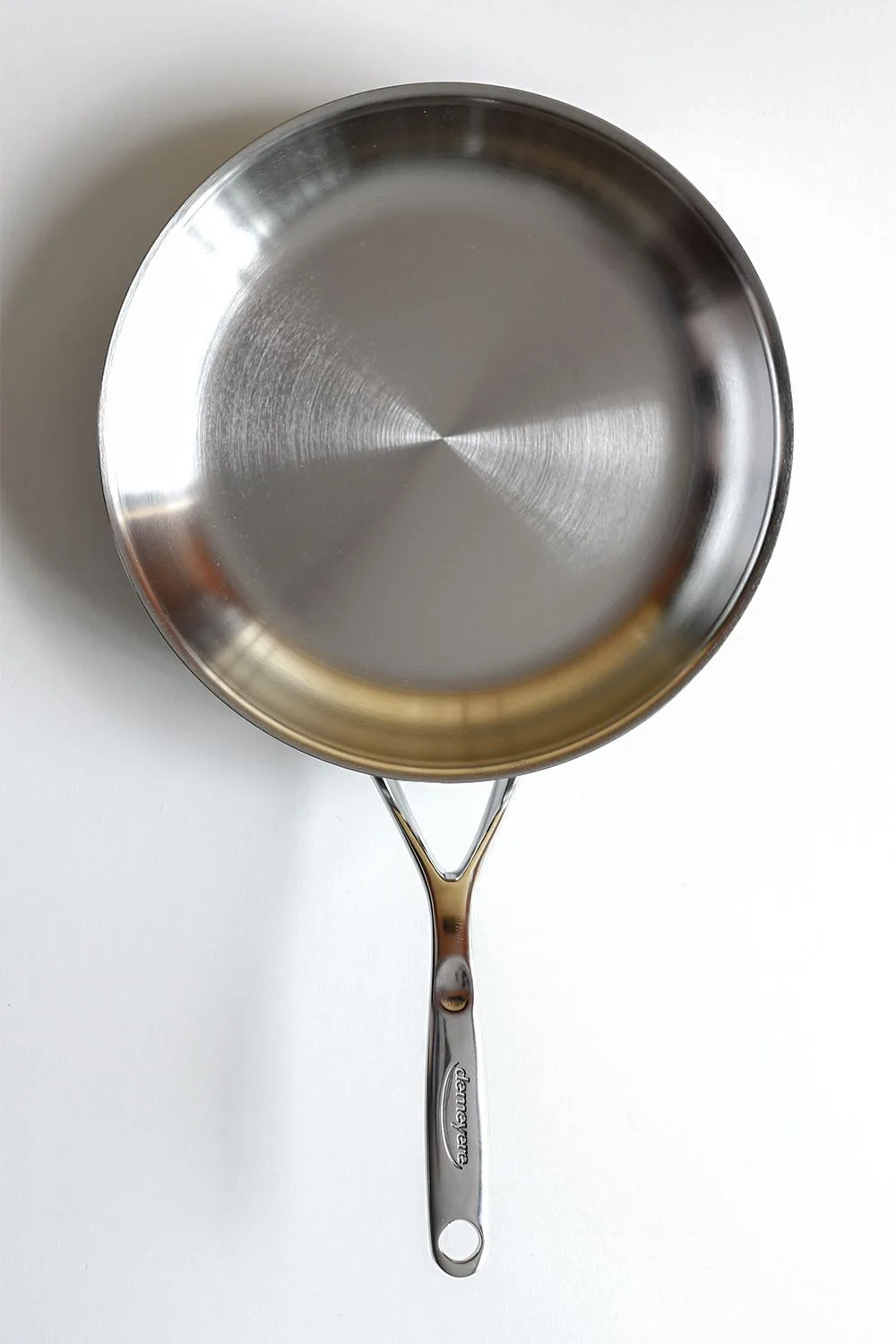
If you are looking for an affordable entry into toxin-free cooking, the Dille & Kamille stainless steel frying pan (Ø28 cm) is an excellent choice.
Performance and Build
This pan is sturdy, aesthetically pleasing, and compatible with all heat sources. Dille & Kamille is a brand focused on sustainability and natural materials, which offers peace of mind for daily use.
Heat Distribution: The 3-layer base ensures the pan heats up evenly and quickly (about 90 seconds on an induction hob).
Handling: The handle stays cool even during high-heat cooking.
The Learning Curve: Because there is no artificial coating, food can stick if the pan isn't used correctly. However, once you learn to preheat the pan properly and use sufficient fat (oil or butter), it performs beautifully for everything from salmon to eggs.
Final Thoughts
Switching to stainless steel is one of the simplest ways to remove "forever chemicals" from your daily routine. It is a robust, reliable, and healthy alternative that will last you decades rather than years. Once you master the technique, you likely won't want to go back to disposable non-stick pans.
Ready to upgrade your kitchen? You can find these sustainable options at Dille & Kamille:
[Frying pan, 3-layer, stainless steel, Ø 28 cm]
[Frying pan, 3-layer, stainless steel, Ø 24 cm]
[Wok, 3-layer, stainless steel, Ø 28 cm]
Most recent blogs
What I'm currently learning.