Why I Swapped Sunflower Oil for Ghee: A Golden Discovery
Why I Swapped Sunflower Oil for Ghee: A Golden Discovery
Have you ever considered what happens to your cooking oil when it hits a hot pan? For years, I didn't give it a second thought. However, after struggling with persistent bloating, acne, and eczema, I decided to take a closer look at my kitchen staples.
I realized I had been using processed sunflower oil my entire life. Many vegetable oils undergo industrial refining involving high temperatures and chemical solvents, which can be hard on the digestive system. Seeking a purer alternative, I discovered ghee. This fragrant, golden oil has since become a cornerstone of my kitchen and my health routine.
What is Ghee?
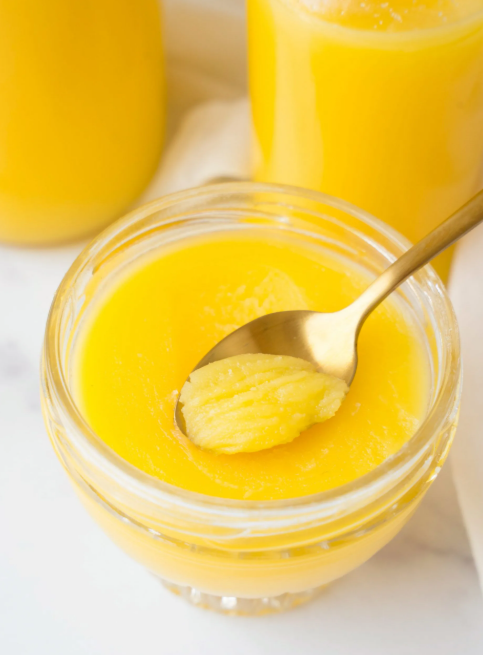
At its simplest, ghee is clarified butter. It is created by slowly heating butter until the water evaporates and the milk solids (lactose and casein) separate. What remains is a pure, golden fat that is incredibly stable at high temperatures.
Ghee originated in India thousands of years ago and remains a staple in Ayurveda, the traditional Indian system of medicine. The Sanskrit word ghṛta means "brightened" or "clarified," referring to both the purification of the butter and the pursuit of inner clarity. Beyond cooking, it is used in traditional rituals, massages, and even natural skincare.
How is Ghee Made?
The process is straightforward but requires patience. Butter—ideally from grass-fed cows—is simmered until the moisture evaporates. The milk proteins eventually settle at the bottom or form a foam on top, which is then filtered out.
The quality of the final product depends heavily on the source. Grass-fed butter typically contains higher levels of nutrients and healthy fatty acids. This focus on minimally processed, nutrient-dense food is a philosophy I value deeply.
The Key Benefits of Ghee
1. High Heat Resistance
Ghee has a smoke point of approximately 250°C, which is significantly higher than regular butter (150°C) or extra virgin olive oil (160–190°C).
The smoke point is the temperature at which an oil begins to burn and release harmful free radicals. Because ghee remains stable at such high temperatures, it is one of the safest choices for searing, stir-frying, and grilling.
2. Supports Gut Health
Ghee naturally contains butyrate (butyric acid). This short-chain fatty acid is a primary energy source for the cells lining your colon. It helps strengthen the intestinal wall and can reduce inflammation. While your body produces butyrate when breaking down fiber, adding ghee to your diet provides a direct, supportive boost to your digestive health.
3. Enhances Vitamin Absorption
Vitamins A, D, E, and K are fat-soluble, meaning your body can only absorb them effectively when consumed with fat. Ghee is not only a source of these vitamins but also provides the healthy fats needed to unlock the nutrients in the rest of your meal. Sautéing your vegetables in ghee, for example, ensures you get the most out of every bite.
Brand Review: GheeEasy
When I made the switch, I looked for a brand that prioritized purity. I eventually settled on GheeEasy, a Dutch company producing organic ghee from European, grass-fed cows.
What I love about GheeEasy:
Mild Aroma: It has a creamy, subtle flavor that doesn't overpower your dishes.
Convenience: It is shelf-stable and doesn't require refrigeration.
Purity: No additives or preservatives—just pure fat.
Value: We use the 850g jar, which is perfect for a household that cooks daily.
Points to consider:
It is more expensive than standard supermarket oils.
It is primarily available in health food stores (like Ekoplaza) or online.
If you are looking for a more intense, nutty flavor specifically for authentic curries, you might also want to explore traditional brands or even high-quality animal fats like tallow.
Most recent blogs
What I'm currently learning.